Waste Container Sizes: 120, 240, 360, 660, 770 and 1100 l

Waste Container Sizes: 120, 240, 360, 660, 770 and 1100 l
Published 07/03/2026

When choosing a waste container, the most important thing is picking the right size for the amount of waste, the number of residents and the location. In this article we review all the standard waste container sizes – from 120 to 1100 litres – and what each one is suited for.

120 l containers

The smallest standard containers on wheels. Compact, easy to push and they don't take up much space.

  • for 1–2 person households and garden cottages;
  • for sorted waste – plastic, paper, glass or food waste;
  • for places where waste is collected frequently.

240 l containers

One of the most popular sizes in Lithuania. They hold twice as much as 120 l, so they suit most private houses.

  • for families of 3–5 people;
  • for small businesses and offices;
  • when waste is collected every two weeks.

360 l containers

Even larger two-wheeled containers that one person can still push easily.

  • for large families;
  • for cafés, restaurants and offices;
  • for small apartment buildings or residents' associations.

660 and 770 l containers

Four-wheeled containers with swivel castors (some with brakes) and a flat lid. This is the in-between option when 360 l is too small and 1100 l is too much or doesn't fit in the bin area.

  • for small apartment buildings;
  • for schools, kindergartens and institutions;
  • for shops and manufacturing companies.

1100 l containers

The largest standard containers, designed for refuse collection vehicles.

  • for apartment building yards;
  • for shopping and business centres;
  • for manufacturing companies and warehouses.

You'll find all 660, 770 and 1100 l models in the Large-capacity waste containers category.

Plastic or metal?

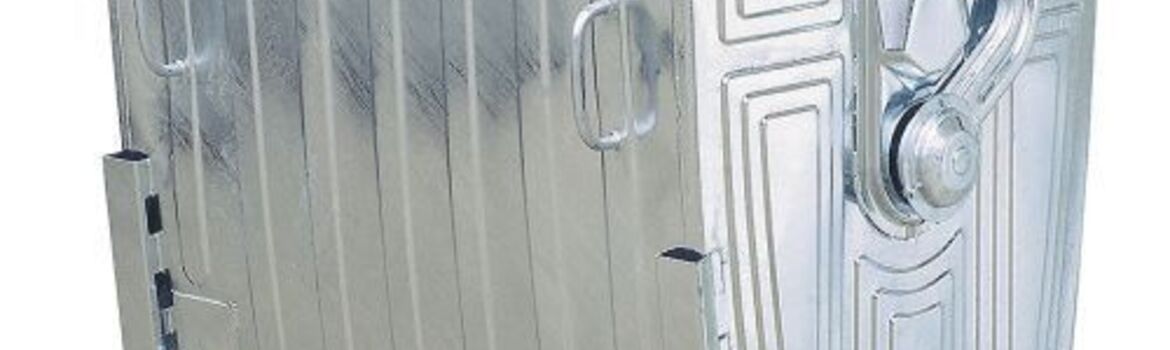
Plastic containers are lighter, don't rust, are UV-resistant and come in various colours, which makes them suitable for sorting. Metal (galvanised steel) containers are sturdier and resistant to sharp or hot waste, so they are more often chosen for manufacturing, workshops and construction.

How to choose?

  1. Number of residents or employees – the more people, the more waste.
  2. Collection frequency – weekly, every two weeks or less often.
  3. Purpose – for mixed or sorted waste.
  4. Location – how much space there is in the bin area or yard.

We explained exactly how to calculate the capacity you need in the article "What size waste container do you need? How to calculate it".

Also read Related products
text_reviews
A compact and lightweight 120 l container for collecting household waste at private homes, country h..
€6000
text_reviews
A standard 240-litre container – a reliable solution for collecting household or sorted waste. ..
€6500
text_reviews
A 360-litre container designed for larger amounts of waste. An excellent choice for large fami..
€10000
A sturdy 660 litre plastic container designed for commercial and industrial use. Capacity – 66..
€27500
text_reviews
A sturdy 770-litre plastic container designed for commercial and industrial use. Capacity – 77..
€29000
text_reviews
The largest container in our range – 1100 l – is designed for collecting large volumes of waste and ..
€35000
Write
Call us