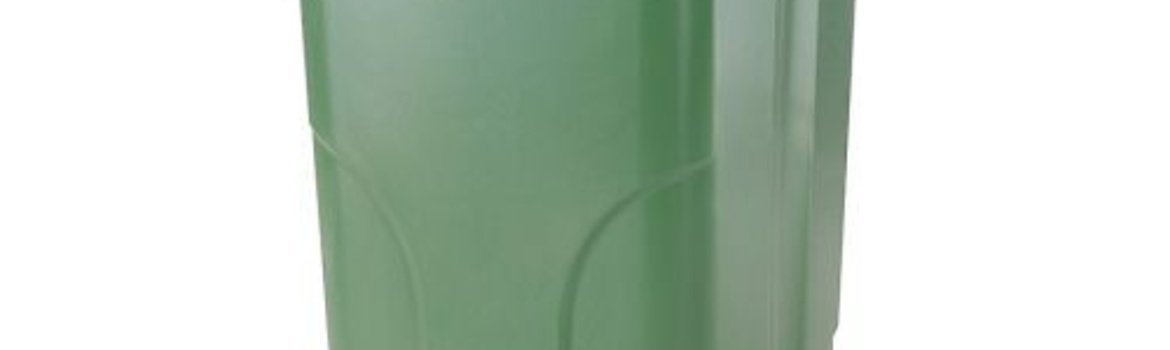
The simplest way to organise deposit packaging collection is this: set up a separate, clearly labelled container just for bottles and cans, place it where people finish their drinks, and appoint a person responsible for emptying it regularly and taking the packaging to a return point. The right container – with an opening in the lid, a lock or a holder – helps keep things tidy and stops deposit packaging ending up in mixed waste.
Offices, schools, sports clubs and events produce quite a few empty bottles and cans every day. If they go into the general waste bin, the deposit value is lost, the mixed waste containers fill up faster, and the packaging is often contaminated with food leftovers. A separate container solves several problems at once:
Check the specific deposit system rules – which packaging is accepted and how it must be returned – by the mark on the packaging and the information provided at return points.
Where the container stands in a publicly accessible place – outside a shop, in a stairwell or at an event – a closed container whose contents can't be seen works best. The 120 l deposit container with a hole in the lid and a lock has an opening in the lid covered with a rubber insert: a bottle or can is easy to drop in but awkward to pull out. The lid locks, so no outsider can take the collected packaging.
Key facts from the manufacturer's data:
If packaging is collected indoors – in an office kitchen, a storeroom or a school corridor – a lock is often unnecessary. In that case the light grey 120 l container for deposit collection is a good fit. It is made of UV-resistant HDPE plastic and has two rubber wheels with a metal axle and a lid. The neutral colour suits both an office and a yard, and its dimensions (width × depth × height – 485 × 540 × 945 mm) let it fit into tighter spaces too.
On streets, in parks, at bus stops or on beaches, people often throw packaging into the nearest bin. The Orkan 65 l anti-vandal waste bin with deposit holder has a separate holder where bottles or cans can be left – they are easy to collect and the packaging doesn't end up in mixed waste. The body and door are made of 2.5 mm galvanised steel, powder-coated, with a 65 l galvanised bucket inside, locked with a triangular lock. The bin weighs 37 kg, so it suits places where strength and vandal resistance are needed.
The location determines whether the container will be used. A few practical tips:
Even the best container won't work if nobody empties it. Agree in advance:
At large events it's worth setting up several containers and making sure full ones can be swapped out.
Put packaging in empty – leftover liquids cause odours and attract wasps. Wash plastic containers periodically with warm water and a mild detergent and let them dry with the lid open. Occasionally take out and wash the inner bucket of an outdoor bin as well. You'll find more tips on container capacity in the article What size waste container do you need? How to calculate it.
Can an ordinary household waste container be used for deposit packaging?
Yes, especially indoors. The main thing is that the container is clearly labelled and used only for deposit packaging. In public places, a container with an opening and a lock is more practical.
How much packaging fits in a 120 l container?
That depends on the size of the packaging and whether it is compressed. Note that deposit packaging usually has to be returned uncrushed – check this at the return point. The deposit container with a hole in the lid has a permitted load of 48 kg.
Is an outdoor waste bin with a holder suitable for a shop or café?
Yes, it is designed for streets, bus stops, parks and event venues, so it also suits the entrance to a shop or café where people leave their empty drink containers.


 Business Excellence Award 2026